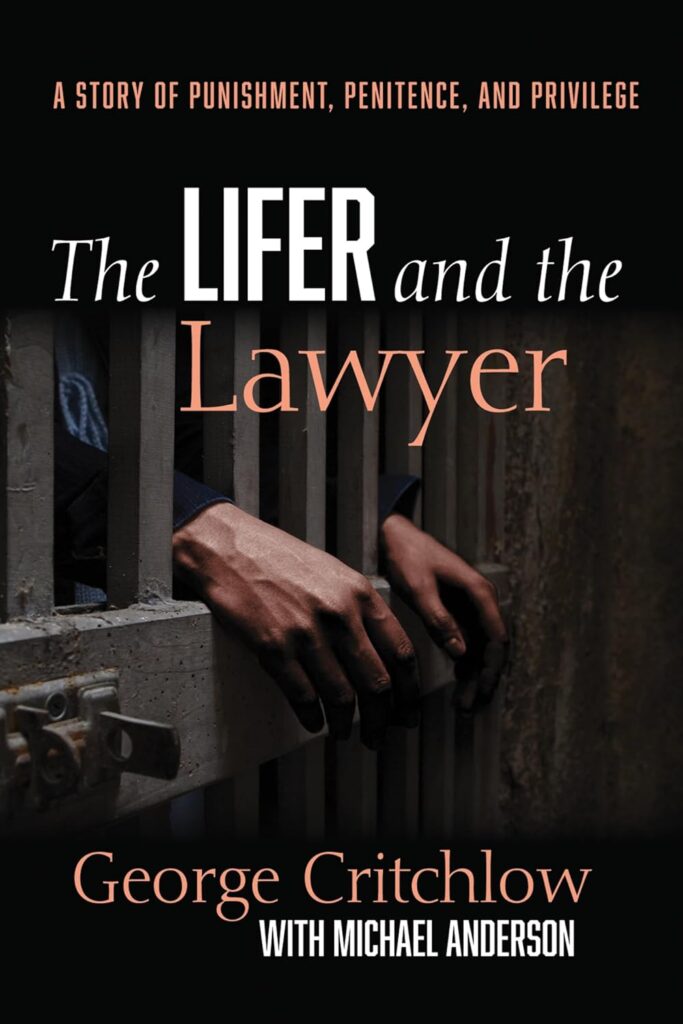
The Lifer and the Lawyer: A Story of Punishment, Penitence, and Privilege is a deeply reflective work of narrative nonfiction that examines the human capacity for change within a criminal justice system largely resistant to redemption. Written by George Critchlow in collaboration with Michael Anderson, the book presents a decades-long account of crime, punishment, faith, and moral transformation, while asking difficult questions about race, power, and the purpose of incarceration in America.
At the center of the narrative is Michael Anderson, an African American man who grew up amid neglect and trauma on Chicago’s South Side and committed a series of violent crimes in 1978 that resulted in ten consecutive life sentences. Critchlow does not excuse these acts, nor does he sensationalize them. Instead, the book traces Anderson’s forty-plus years in prison, focusing on the slow and often uncomfortable process of accountability, spiritual growth, and moral reckoning that followed.
Running parallel to Anderson’s story is Critchlow’s own evolution. A young white lawyer from a position of social and economic privilege, he was appointed to defend Anderson and gradually developed a relationship that extended far beyond the courtroom. Over decades of correspondence, parole hearings, and personal reflection, Critchlow interrogates his own assumptions about justice, race, and professional distance. This dual perspective gives the book much of its strength, preventing it from becoming either a single-voice redemption narrative or a purely academic critique.
Stylistically, the prose is measured and thoughtful. Critchlow favors clarity and moral inquiry over emotional manipulation, allowing the weight of the lived experiences to speak for themselves. Faith plays a central role in Anderson’s transformation, but it is presented as an internal discipline rather than dogma. The book consistently returns to a core tension: whether punishment should exist solely as retribution, or whether it can coexist with rehabilitation and human dignity.
Beyond individual lives, The Lifer and the Lawyer functions as a broader commentary on the American penal system’s reliance on life sentences and its reluctance to reassess long-term incarceration, even in cases of demonstrable change. The narrative gains additional resonance given Anderson’s eventual release, reinforcing the book’s argument that people are not fixed at their worst moments.
Verdict
The Lifer and the Lawyer is a compelling and morally serious work that challenges readers to reconsider entrenched ideas about crime, punishment, and redemption. Grounded in lived experience and sustained reflection, it will resonate strongly with readers interested in criminal justice reform, faith-based transformation, and human-centered nonfiction. The book does not offer easy answers, but it powerfully affirms the possibility of change.