
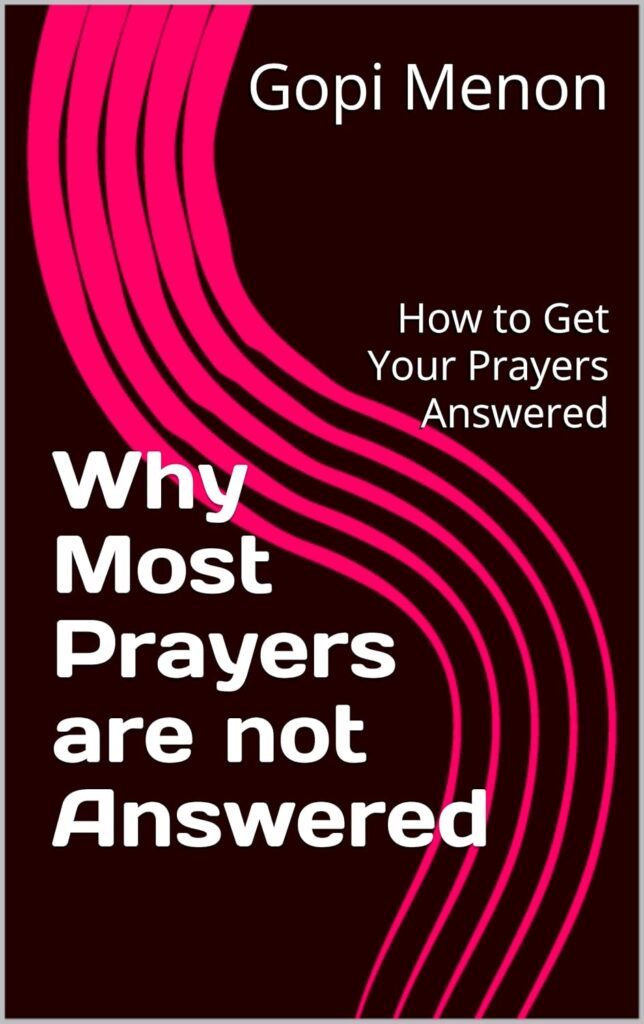
In Why Most Prayers Are Not Answered, Gopi Menon presents a reflective and deliberately provocative examination of prayer, faith, and spiritual conditioning. Framed as the fourth installment in the Happy Living the Joycentrix Way series, the book challenges ritual-based religious practices and invites readers to reconsider what prayer means—and what it is meant to accomplish.
Menon’s argument emerges from personal experience rather than doctrine. Drawing on decades of spiritual searching across Hindu and Catholic traditions, he recounts a growing dissatisfaction with ritual prayer that failed to produce meaningful change in his own life. Rather than positioning himself as an authority dispensing answers, Menon approaches the subject as a long-time seeker who arrived at his conclusions through questioning, doubt, and experimentation.
The book is structured into three parts, each building on the last. Part One interrogates commonly held assumptions about prayer, raising questions many readers may find uncomfortable: Are prayers ever answered? Does divine intervention function the way believers expect? Why do people pray in the first place? Menon does not attempt to reconcile these questions with orthodox theology; instead, he reframes prayer as a psychological and spiritual alignment process rather than a transactional appeal to a deity.
Part Two shifts into metaphysical territory, introducing concepts such as the Universal Mind, inner guidance, and intuition. Here, Menon proposes “Manifest Prayer” as an alternative to ritualized prayer—an approach rooted in awareness, intention, and alignment rather than repetition or supplication. This section will resonate strongly with readers familiar with New Thought or manifestation philosophies, while more traditional believers may find it philosophically challenging.
Part Three grounds the theory in practical examples, illustrating how Menon believes alignment with inner guidance can lead to tangible outcomes in daily life. These anecdotes are presented as illustrative rather than prescriptive, reinforcing the book’s central theme: that spiritual effectiveness is personal, experiential, and deeply subjective.
Stylistically, the prose is clear, direct, and accessible. Menon avoids mystical abstraction, favoring logical progression and plain language. While the book does not attempt theological balance—and will likely polarize readers—it succeeds in articulating a coherent worldview with consistency and sincerity.
Verdict
Why Most Prayers Are Not Answered is a thoughtful and unapologetically unconventional exploration of spirituality that prioritizes inquiry over reassurance. Readers open to metaphysical interpretations of prayer and personal manifestation will find the book engaging and stimulating. Those seeking traditional religious affirmation may disagree with its premises, but the work’s clarity and honesty make it a valuable contribution to contemporary spiritual discourse.